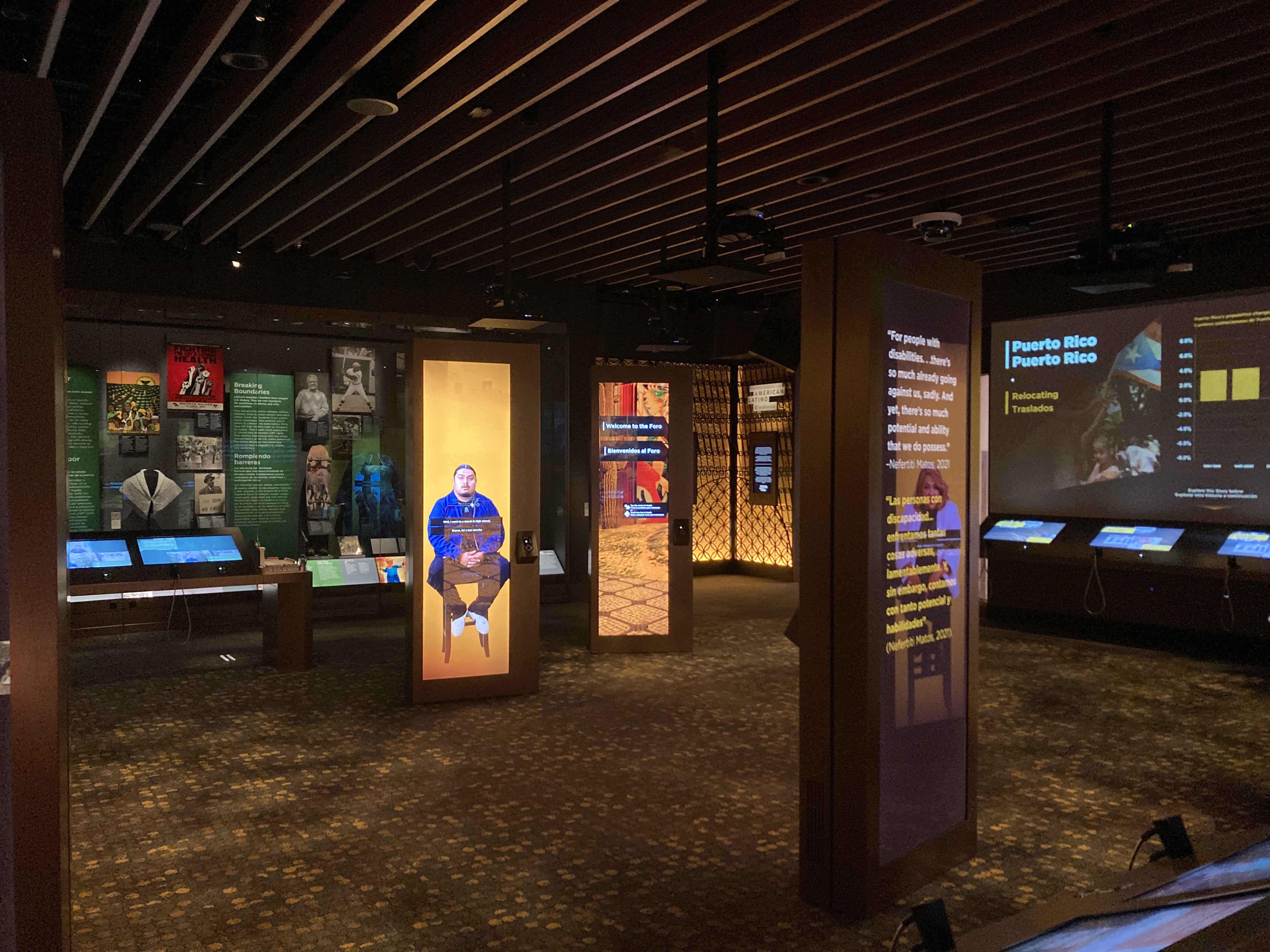
While the National Museum of the American Latino (NMAL) has been part of the Smithsonian for over 20 years, the Molina Family Latino Gallery inside the National Museum of American History is their first dedicated gallery space. This gallery will be NMAL’s home for the next 10 years while they work to build a museum of their own.
The inaugural exhibition, ¡Presente!, uncovers hidden and forgotten stories, lays the foundation for understanding that Latino history is American history, and celebrates the “mestizaje” or mixing of cultures and identities that is a point of pride among Latinos.
This is the largest project I’ve worked on and it consists of 7 types of media experiences installed throughout the gallery in 28 individual instances. Each experience is built around the types of stories that NMAL wanted to tell across exhibitions so the digital pieces in the gallery would last for the entire run of the gallery, rather than this exhibition alone. To provide flexibility, digital experiences use a templated approach to content. Each experience is connected to a robust content management system that allows the NMAL digital media staff to update content during or between exhibitions.
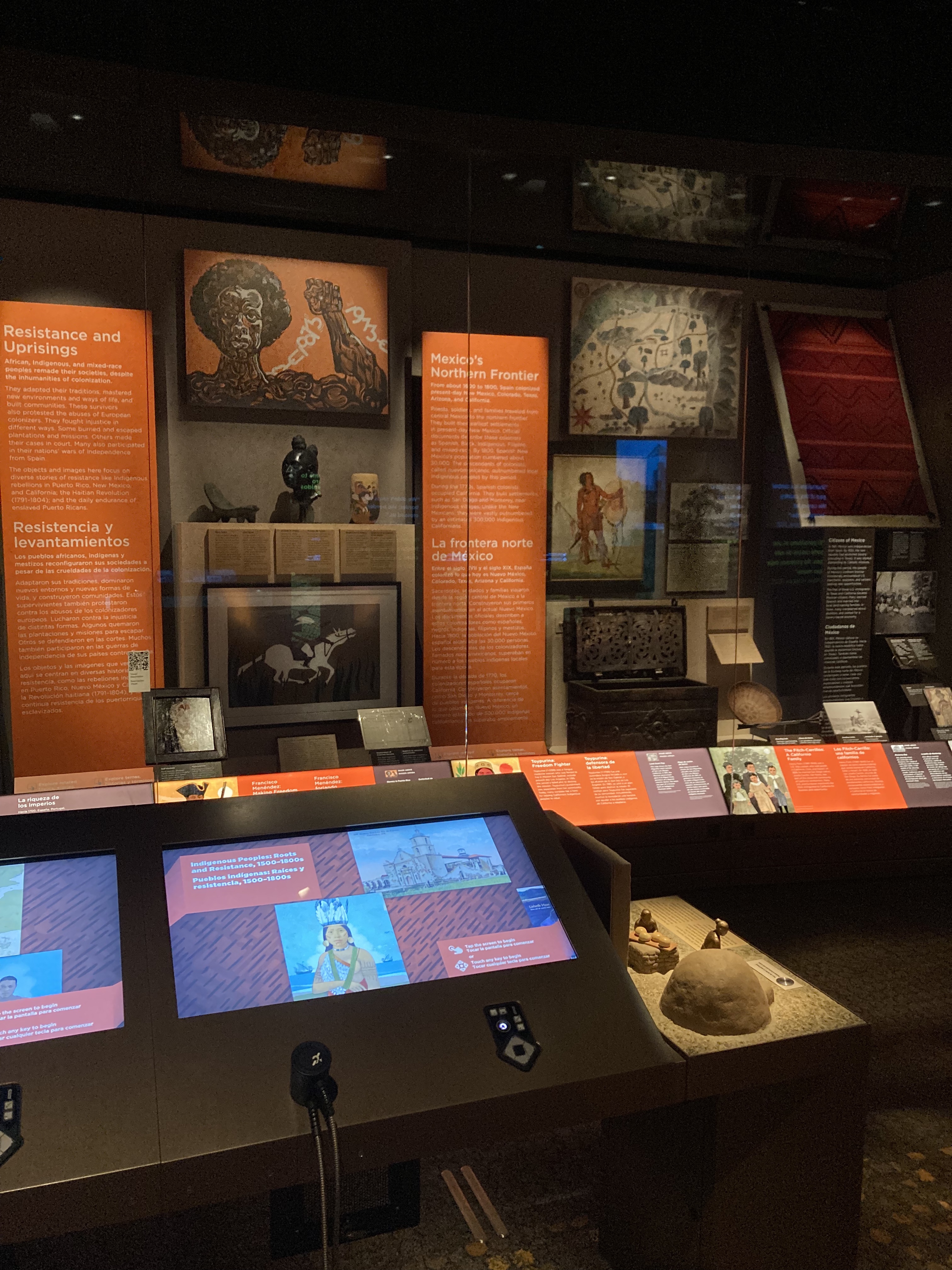

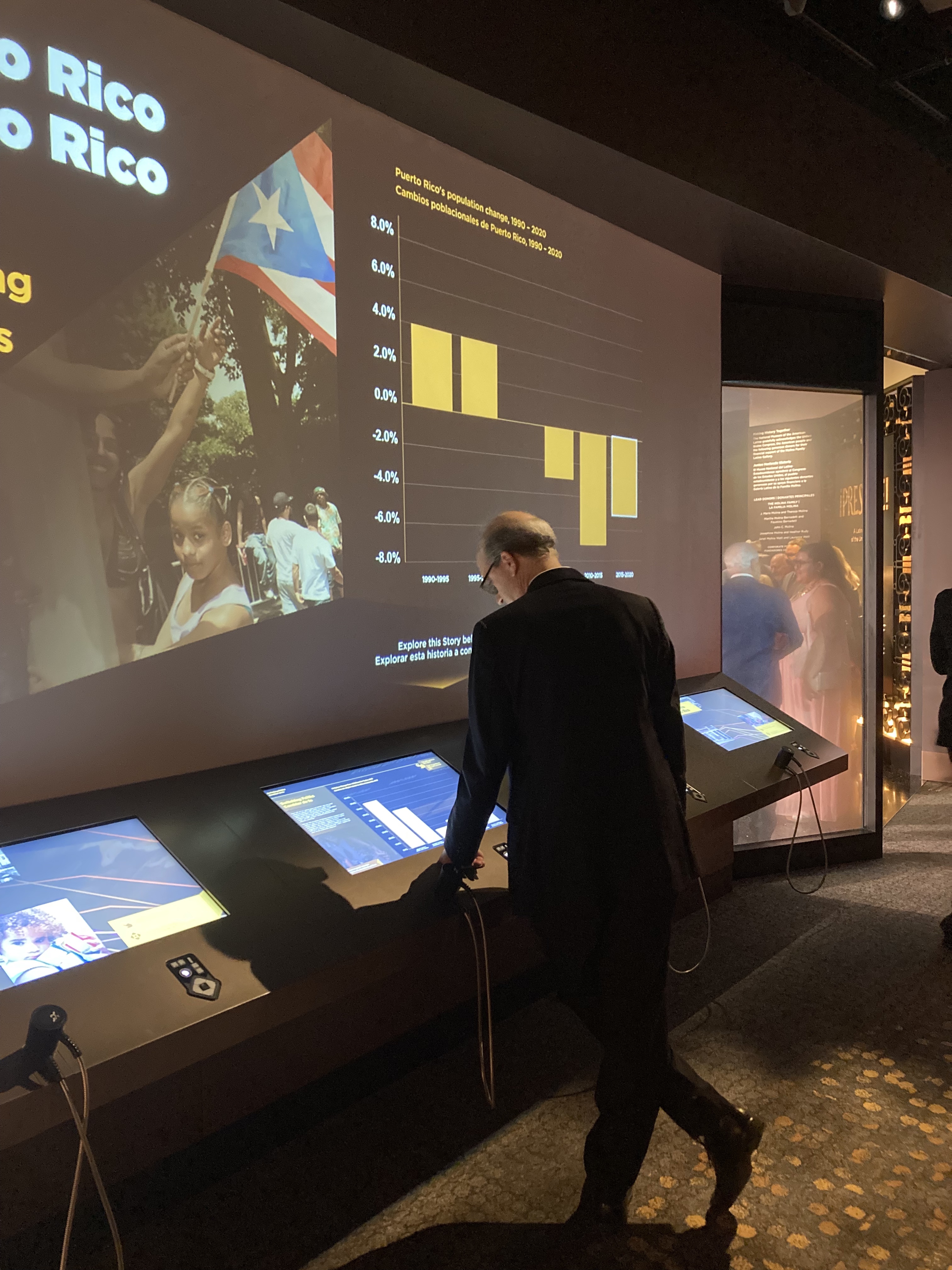
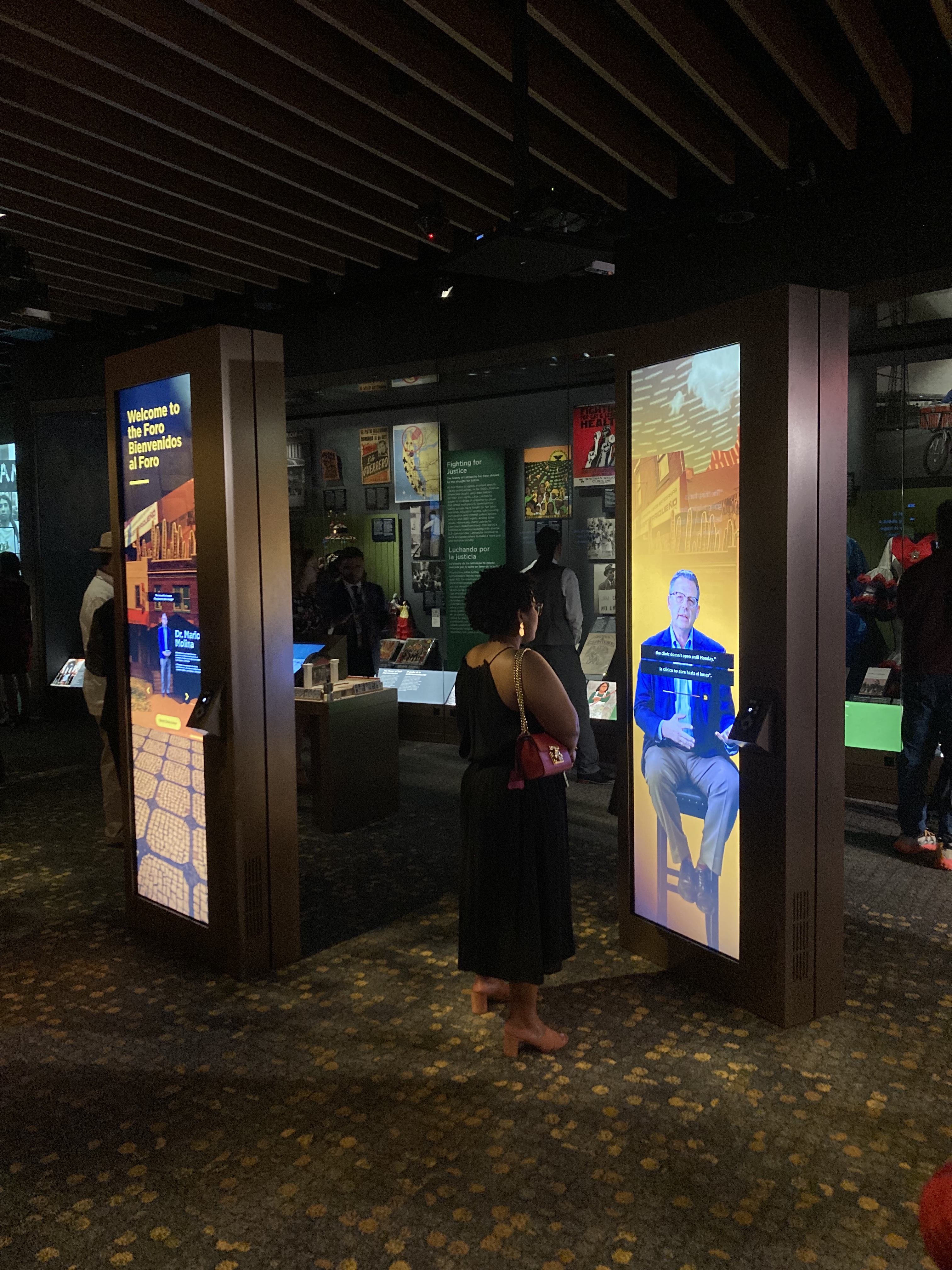
In addition to being the largest project I’ve worked on, it’s also the most accessible. Inclusive design was a priority throughout all stages of the project. English and Spanish are presented on equal footing. All text and captions are shown in both languages at all times. All touch screen experiences in the gallery are also paired with a tactile keypad and screen reader that can be used by visitors who are blind, have low vision, or limited mobility to navigate the interactives.
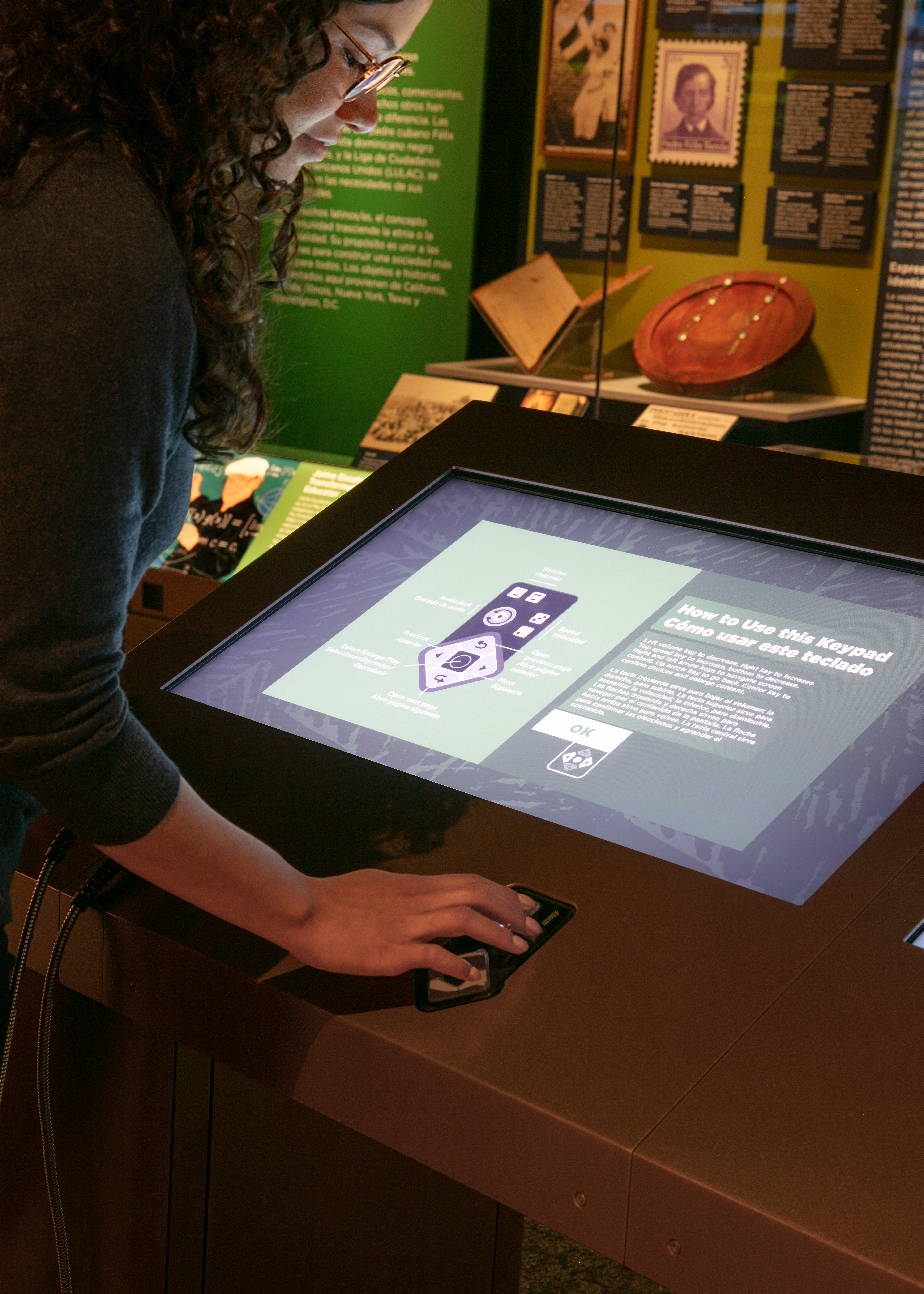
I worked closely with Smithsonian’s internal Accessibility office and our UX designers to devise the navigation for the keypad and write the script for the screen reader. This was a long and meticulous process that started with understanding best practices like having each button on the keypad perform a single action and when to use the word “button” vs. “key” when describing tactile vs. digital interactive elements.
At several stages of the design process we put our designs to the test with Smithsonian’s deep well of expert users to ensure that they were intuitive and not overly verbose.
Check out a Washington Post article describing the accessibility features of the gallery:
https://www.washingtonpost.com/arts-entertainment/2022/06/14/smithsonian-accessible-gallery-molina/
 claire bradley